

Urinary incontinence Southampton means leaking urine when you do not intend to. It might happen when you cough, laugh, exercise or suddenly feel an urgent need to use the toilet. For some people, it happens because the bladder does not empty properly.
It is more common than many people realise, but that does not mean you should simply put up with it. Urinary leakage is not an inevitable part of getting older, and it is worth discussing with a healthcare professional. [1]
The effects can go beyond the physical symptoms. You might find yourself worrying about long journeys, avoiding exercise or waking up several times during the night. In some cases, leakage can also point to an underlying health problem that needs attention.
Can urinary incontinence get worse if it is left untreated?
Not always. Urinary incontinence Southampton affects people differently, and its progression depends on the underlying cause.
For example, stress incontinence causes leakage when pressure is placed on the bladder, such as when coughing, sneezing, lifting or exercising. You may suddenly feel a strong need to use the toilet, sometimes with so little warning that reaching it in time becomes difficult. Some people have a combination of both types, while others experience overflow incontinence when their bladder cannot empty completely. [1]
Symptoms may stay much the same, improve or become more troublesome over time. However, leaving them unassessed means you may miss an opportunity to identify the cause and find an appropriate way to manage them.
Some types of incontinence respond to treatment or lifestyle changes, while others need further investigation. The NHS advises speaking to a GP if you experience urinary incontinence rather than assuming it is something you have to live with. [1]
Also read: Tired of Frequent Bathroom Trips? Know the Symptoms and Options

What problems can untreated incontinence cause?
1. It can affect your confidence and everyday life
Even a small amount of leakage can change how comfortable you feel during the day.
You might start checking where the nearest toilet is before going out, carrying spare clothes or worrying about an accident when meeting friends. Intimacy can also become difficult if you feel anxious about leakage.
You might find yourself worrying more about going out, meeting people or doing things you once enjoyed. After a while, this can start to affect your confidence and daily routine. If urinary leakage is bothering you, don’t feel you have to put up with it. It’s worth talking to someone and finding out what can help.
2. Your sleep may suffer
Waking up repeatedly to urinate or dealing with leakage during the night can leave you feeling tired the following day.
There are several possible reasons for night-time urinary incontinence symptoms. They are not always caused by weak pelvic-floor muscles, so it is important to understand what is happening rather than assume that one treatment will solve the problem.
A GP can help investigate possible causes and discuss suitable next steps.
3. Skin irritation can develop
Frequent urine leakage can leave your skin feeling sore, uncomfortable or irritated, especially when the skin is exposed to moisture repeatedly.
Absorbent pads and other continence products can make day-to-day management easier. However, NICE advises that these products should generally be used as a coping measure, alongside treatment or for longer-term management after other treatment options have been explored. [2]
If your skin becomes persistently sore, irritated or broken, speak to a healthcare professional.
4. You may stop doing things you enjoy
This is one of the less obvious effects of urinary incontinence.
You might give up running, avoid the gym, turn down invitations or feel uncomfortable travelling because you are worried about finding a toilet or experiencing leakage.
For someone with stress incontinence, even coughing, laughing or lifting something can become a source of concern.
You do not necessarily need to stop these activities. Finding out what type of incontinence you have can help you understand which management options may be suitable.
Could urinary incontinence be a sign of another health condition?
Yes. Urinary leakage is not always caused by weak pelvic-floor muscles.
Possible causes include bladder overactivity, constipation, urinary tract problems, certain medicines, neurological conditions and difficulties emptying the bladder. [1]
Overflow incontinence, for example, can be associated with problems such as an enlarged prostate, bladder stones or constipation. [1]
This is why identifying the cause matters. Pelvic-floor exercises or stimulation may be relevant in some circumstances, but they will not address every possible reason for urinary leakage.
A proper assessment helps establish whether you need pelvic-floor support, bladder treatment, medication or further medical investigation.

When should you see a GP about urinary leakage?
If you’re experiencing urinary leakage, it’s worth speaking to your GP rather than waiting for the symptoms to become more noticeable. [1]
It is particularly important to seek advice if leakage is new, changing or accompanied by other symptoms.
Blood in your urine needs checking, even if there is only a small amount or you are not certain it is blood. [3] Pain, repeated urinary infections, difficulty emptying your bladder and other unusual changes in urination should also be discussed with a healthcare professional.
Do not rely on a private treatment consultation Southampton to investigate symptoms that may need medical attention. Unexplained urinary leakage should be assessed by an appropriate healthcare professional before considering private treatment.
Blood in your urine, pain, recurrent urinary infections or difficulty emptying your bladder should be discussed with a healthcare professional. If you suddenly become unable to pass urine, particularly if you have lower abdominal pain, seek urgent medical attention.
A private treatment consultation should never delay necessary medical assessment or treatment.
Read also: Can Pelvic-Floor Exercises Make Urinary Incontinence Worse?
What treatments are available for urinary incontinence?
There is no single treatment that works for everyone. The right approach depends on the type of incontinence, its cause and your individual circumstances.
For women affected by stress or mixed urinary incontinence, NICE recommends supervised pelvic-floor muscle training for at least three months as a first-line treatment. Bladder training is also recommended for women with urgency or mixed urinary incontinence. [4]
Other management options may include lifestyle changes, medication and continence products. In some circumstances, procedures or surgery may be considered. Men experiencing stress incontinence following prostate surgery may also be offered supervised pelvic-floor muscle training. [5]
The important thing is to choose an approach that addresses your particular symptoms rather than assuming that every type of leakage needs the same treatment.

What does EMS pelvic-floor stimulation involve?
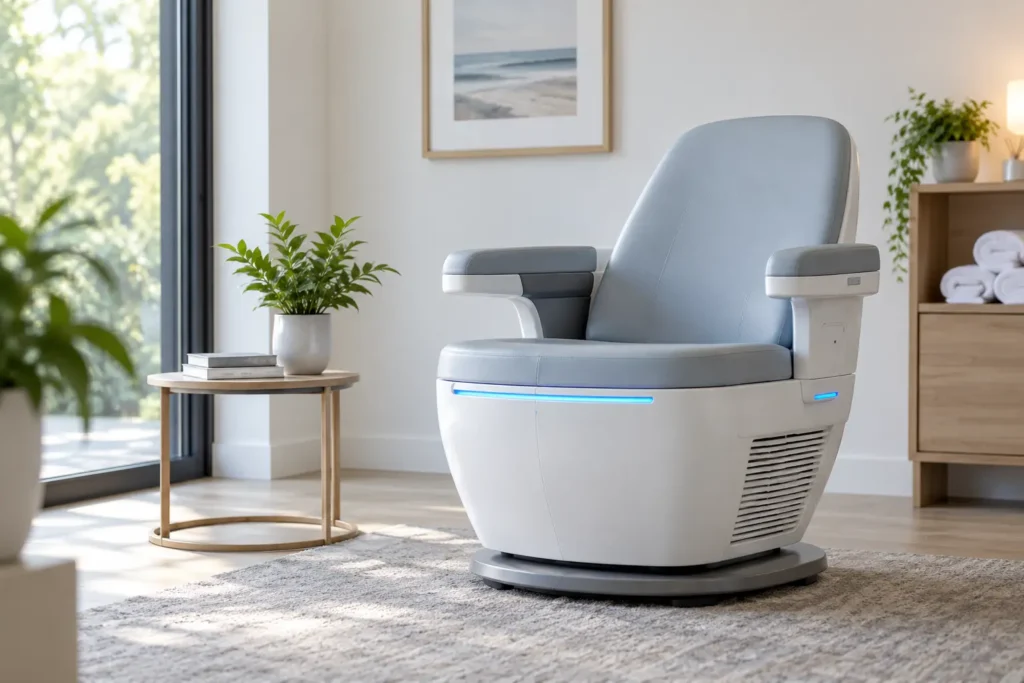
Incontinence Direct Southampton offers electromagnetic pelvic-floor stimulation (EMS) as a private treatment option.
The treatment uses electromagnetic technology and is designed to stimulate pelvic-floor muscle activity while the client remains seated and clothed.
Before considering this option, it is important to understand what the specific device is designed to do, what clinical evidence supports its use and whether it is appropriate for your individual circumstances.
EMS should not be presented as a guaranteed solution for urinary leakage or as a replacement for established medical assessment and treatment.
What should you ask before choosing a private treatment?
Before paying for any incontinence treatment, it is worth asking a few straightforward questions:
- What type of urinary incontinence might I have?
- Should I see my GP before starting treatment?
- Is this treatment suitable for my symptoms and medical history?
- What is the treatment designed to do?
- What evidence supports the specific device or treatment?
- What results can I realistically expect?
- How many sessions might be recommended, and why?
- Are there any medical conditions or circumstances that would make treatment unsuitable?
- What happens if I do not notice an improvement?
- Will this treatment complement, rather than replace, recommended medical care?
A trustworthy provider should clearly explain what the treatment may offer, its limitations and any potential risks. Avoid providers who promise guaranteed outcomes or suggest that medical advice is not necessary before starting treatment.
Why does evidence for the specific EMS device matter?
Not all electrical stimulation devices Southampton use the same technology or operate in the same way. Research involving one device cannot automatically be used to support claims about another.
Before making claims about treatment effectiveness, providers should be able to demonstrate that the available evidence relates to the specific device, its intended purpose and the condition being discussed.
A device’s regulatory status and conformity marking should also be checked. However, these do not automatically prove that every advertised effectiveness claim is supported by clinical evidence.
If you are considering EMS treatment, ask the provider what evidence supports the particular device and what limitations you should understand before proceeding.
Also Read: Why Do I Leak Urine Even When My Bladder Isn’t Full?
FAQs
Q: Can urinary incontinence Southampton go away by itself?
Sometimes symptoms improve when an underlying cause is addressed, but it is not advisable to assume they will disappear without help. Speak to your GP to understand what may be causing the leakage. [1]
Q: Is urine leakage something that naturally happens as you get older?
It becomes more common with age, but that does not make it an inevitable part of getting older. Treatment and management options are available. [1]
Q: Can pelvic-floor exercises help urinary leakage?
Pelvic-floor exercises can make a difference for certain types of urinary incontinence. For women experiencing stress or mixed urinary incontinence, NICE recommends supervised pelvic-floor muscle training for at least three months as an initial treatment option. [4]
Q: Can urinary incontinence Southampton be treated without surgery?
Yes. Depending on the cause, options can include pelvic-floor muscle training, bladder training, lifestyle changes and medication. Appropriate continence products can also help manage symptoms. [2]
Q: Should I see my GP before having private incontinence treatment?
If you have unexplained urinary leakage, medical assessment is advisable. If your symptoms are new or you also experience pain, blood in your urine or difficulty passing urine, seek medical advice.
Q: Can urinary leakage be a sign of something more serious?
Sometimes. Urinary leakage has several possible causes, including bladder problems, urinary tract conditions and neurological conditions. Blood in the urine should always be checked by a healthcare professional. [1][3]
Q: Is EMS a cure for urinary incontinence?
Some people consider EMS when pelvic-floor exercises alone aren’t enough for them. It works by stimulating the pelvic-floor muscles, but it isn’t suitable for everyone. If you’re thinking about trying it, speak to a healthcare professional first and find out whether it makes sense for your situation.
References & Further Reading
[1] NHS – Urinary incontinence
[2] NHS – Urinary incontinence: Non-surgical treatment
[3] NHS – Blood in urine
[4] NICE – NG123: Urinary incontinence and pelvic organ prolapse in women – Recommendations
[5] NICE – CG97: Lower urinary tract symptoms in men – Recommendations
[6] ASA/CAP – Electrical stimulation devices and incontinence: Advertising guidance
Don’t wait until urinary leakage controls your life
Talking about urinary leakage isn’t always easy. Many people feel embarrassed about bringing it up or think it’s just something they have to live with, so they keep putting off getting help.
But you do not have to wait for it to interfere with your daily routine before seeking advice.
If you’re experiencing urinary leakage, understanding what’s causing it is a good first step towards finding the right support and treatment options. Depending on your symptoms, pelvic-floor training, bladder training, lifestyle changes, medication or other medical options may be appropriate. [1][2]
If you are considering non-surgical pelvic-floor stimulation, a consultation with Incontinence Direct can help you understand what the EMS treatment involves and whether it may be suitable for your circumstances. It should be considered alongside appropriate medical advice, not as a substitute for it.
Most importantly, there is no reason to feel embarrassed about asking for help. Urinary leakage is a health concern, and you deserve to have it taken seriously.
For further information, Please Call Us on 03300 100 026